


- Details
Disaster Preparedness Is an Important Part of Back-to-School Planning
SPRINGFIELD–Whether it’s a severe weather event, power for telecommunications loss, or the threat of school violence, students need emergency preparedness information during this Back2School Safety Month. “August is a busy month with students returning to school and college and we encourage preparedness education so that the school year is as smooth and positive as possible,” said Illinois Emergency Management Agency and Office of Homeland Security (IEMA-OHS) Acting Director Theodore (Ted) Berger.
Storms and storm-related emergencies can affect a student’s transportation, so alternative plans should be mapped out ahead of time. If power or cell phone service goes out, students need other ways to communicate with family and schools. A student’s digital security can prevent problems like identity theft and scams.
Additionally, students in grade and high school can use Safe2HelpIL as a tool to help keep them safe. Students can utilize Safe2HelpIL via email, phone call, text, or app to confidentially send an alert on such issues as bullying, mental health struggles, or threats of violence.
- Students can reach Safe2Help several ways:
- Call 1-844-4SAFEIL (723345)
- Text SAFE2 (72332)
- Online app at https://app.safe22helpil.com/
- Email
This email address is being protected from spambots. You need JavaScript enabled to view it. .
More information specifically about student preparedness can be found at https://ready.illinois.gov/plan/children.html.
Illinois Emergency Management Agency and Office of Homeland Security (IEMA-OHS): www.Ready.Illinois.gov is.gov
- Details
IEMA-OHS Recognizes Extreme Heat Safety Month
Springfield - July is Extreme Heat Safety Month, and the Illinois Emergency Management Agency and Office of Homeland Security (IEMA-OHS) is asking everyone to understand the danger to you, your family, and your pets.
"The best preparedness is individual preparedness," explained IEMA-OHS Acting Director Theodore (Ted) Berger. "If you and your family are ready for extreme heat, you can prevent inconvenience, frustration, and even illness. The recent week-long heat wave was a clear reminder in the Midwest that heat affects us too."
Extreme heat is defined as high heat and humidity temperatures above 90 degrees for at least two to three days. Older adults, children, and people with certain illnesses and chronic conditions are at greater risk from extreme heat. Take these steps to prepare for extreme heat and prevent heat-related illnesses:
• Hydrate with water, not caffeinated or alcoholic beverages
• Wear light-colored, lightweight, and loose-fitting clothing
• Avoid strenuous activity during mid-day
• Use awnings or curtains indoors to deflect the sun
• Fans will move air around, but does not lower your temperature
• Use air conditioning inside your home or visit a store or local mall
• Know your local cooling centers in Illinois
• Never leave children or pets in a vehicle
• Get trained in first aid to help those with heat illness
• Check on neighbors and elderly who may be more vulnerable to extreme heat
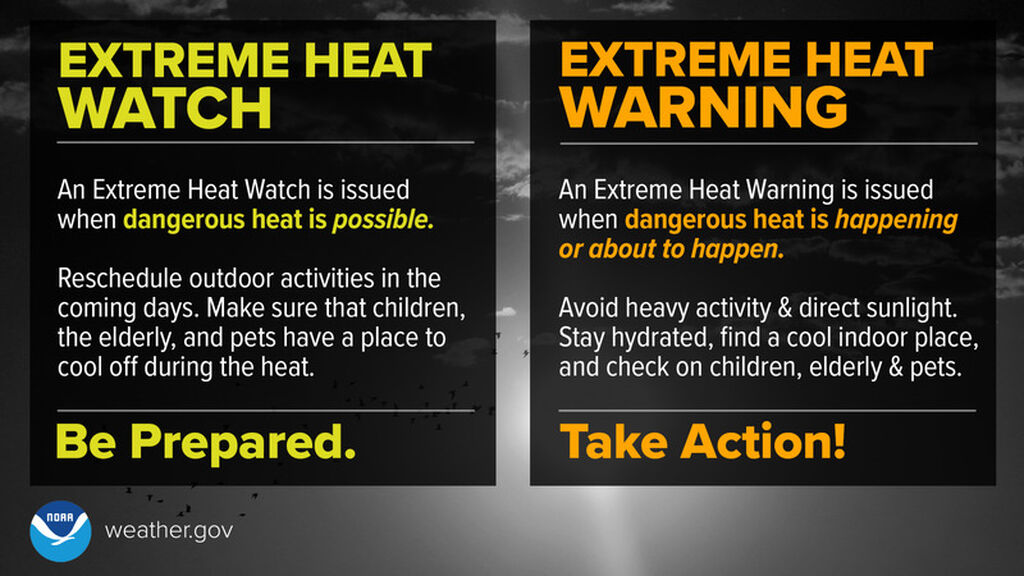
Learn the differences between a heat watch vs heat warning (NWS): https://www.weather.gov/safety/heat-ww
More tips on extreme heat safety can be found here: https://ready.illinois.gov/hazards/extremetempshot.html
Illinois Emergency Management Agency and Office of Homeland Security (IEMA-OHS): www.Ready.Illinois.gov
- Details
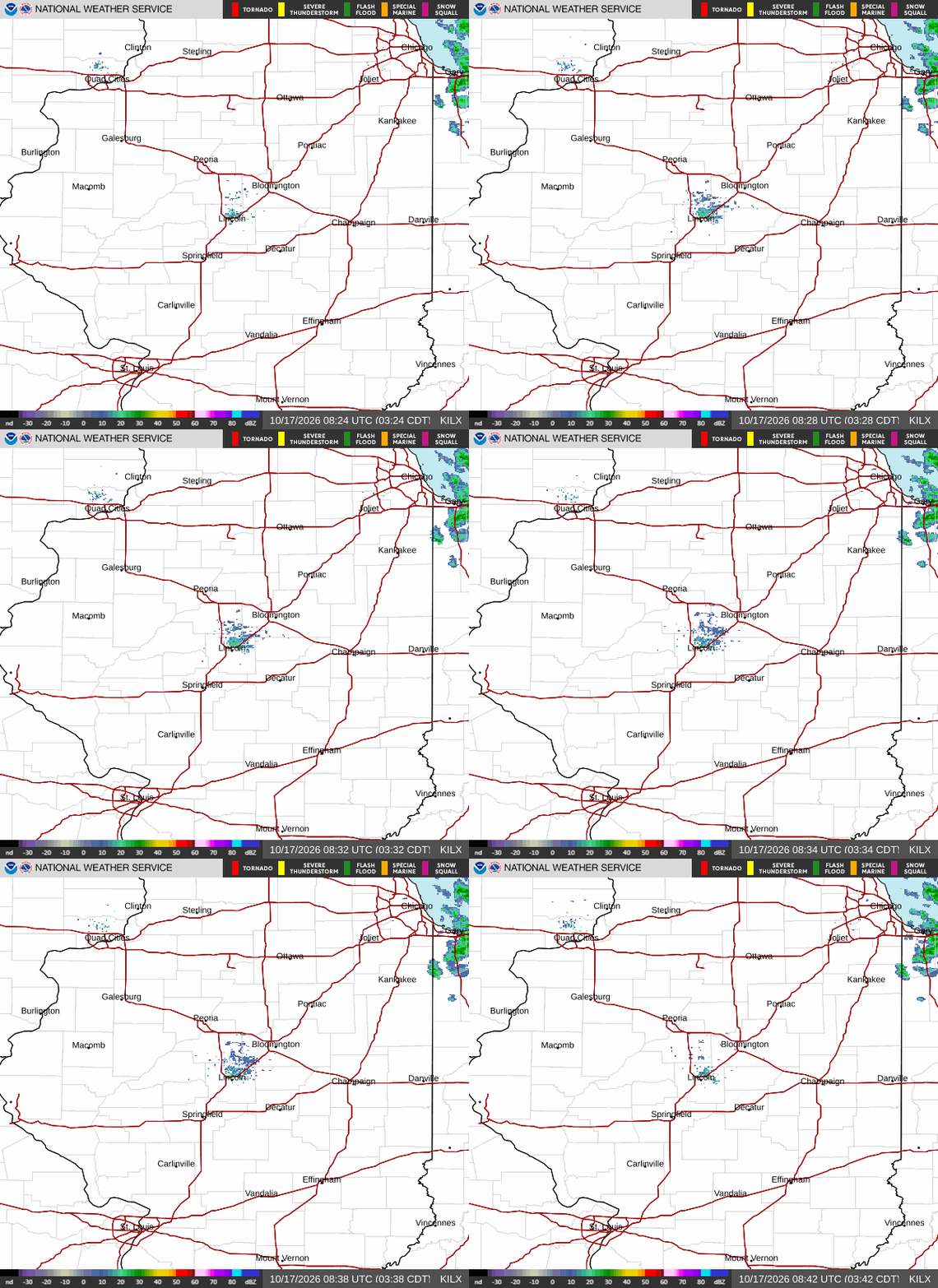
Severe Weather in Midwest Can Be Spawned by Hurricanes
IEMA-OHS encourages residents to be prepared for the effects of strong hurricanes
Springfield - While a hurricane won't hit Illinois, some tropical storm remnants move far inland to cause flooding and wind damage. "I know it's unusual to ask Illinoisans to be prepared for hurricane season June 1 - November 1, but the Midwest could feel the effects of any strong hurricane," said Illinois Emergency Management Agency and Office of Homeland Security (IEMA-OHS) Interim Director Khayyat.
"It was just last year that the remnants of Hurricane Helene brought damaging winds, heavy rain, and flooding to our state," Khayyat continued. "This is why IEMA-OHS continuously monitors the National Weather Service forecasts so we are prepared if severe weather tracks from the coast into Illinois."
Residents are encouraged to subscribe to weather alerts through a local National Weather Service office and/or their local media. That is good advice whether you are susceptible to hurricane remnants or if you plan to travel to areas that frequently have hurricanes.
Vacation preparation should entail the following tasks:
• Know your hurricane risks including inland locations
• Update family emergency plans
• Enhance your preparedness kit supplies
• Subscribe to your vacation destination's emergency alerts
• Familiarize yourself with multiple evacuation zones for all travel locations
• Keep your cell phone charged for weather warnings other emergency alerts
• Share your location with family members so they know where you are
• Frequently check the weather, news, and traffic going to, and at your destination
• Check FEMA's website for more hurricane preparedness tips.
Page 3 of 3